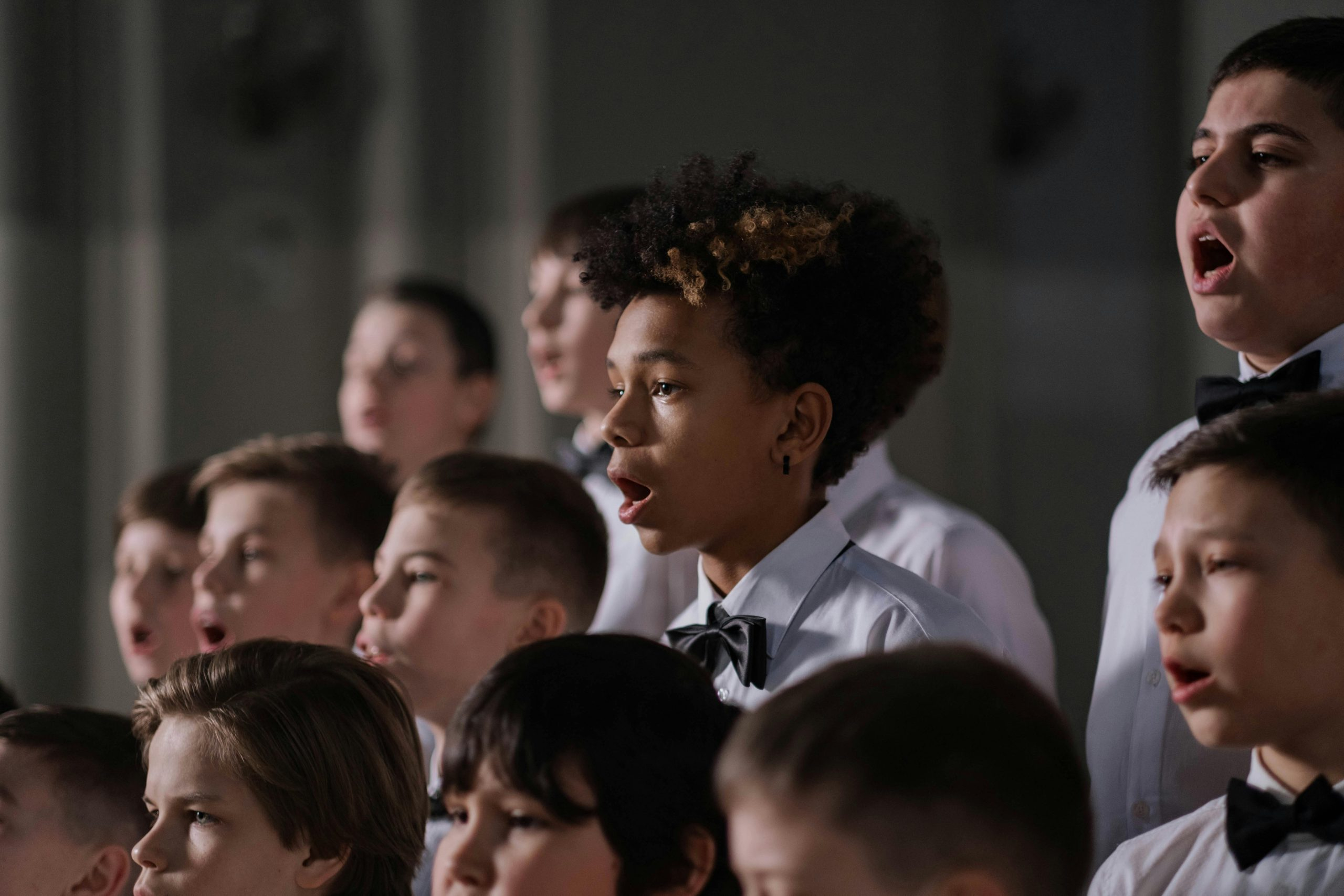
Music and math have always been two subjects that have shared a close relationship. While it’s commonly known that music can enhance certain cognitive skills, such as memory and listening abilities, there’s also evidence that suggests it can enhance mathematical abilities in young children. As a parent or educator, it’s important to understand the link between music education and math skills so that you can provide the best learning opportunities for the young minds in your care. In this article, we’ll dive into the many ways in which music education can enhance mathematical abilities in young children.
The Connection Between Music Education and Math
The connection between music and math can be traced back to Pythagoras, who believed that music and math were intertwined and shared a common origin. Modern research has also proven this relationship, showing that the same areas of the brain are activated when performing mathematical and musical tasks. It’s clear that music education can have a profound impact on a child’s mathematical abilities.
Improved Spatial-Temporal Reasoning
Spatial-temporal reasoning is the ability to mentally manipulate objects in space and time, which is a crucial skill for understanding spatial and mathematical concepts. This skill is also directly related to musical abilities, as musicians must read and interpret musical notation, which is essentially a spatial-temporal language. Studies have shown that exposure to music education can improve spatial-temporal reasoning in children, which translates to improved performance in math.
Increased Focus and Attention
Music education also requires a great deal of focus and attention, as students must concentrate on things like pitch, tone, and rhythm. This constant use of focus and attention can transfer to other academic subjects, including math. In fact, a study conducted by the National Endowment for the Arts found that students who participate in musical activities are more likely to excel in math and science compared to those who have no musical exposure. This is because the same skills that are needed for music, such as focus, can also enhance learning in other subjects.
Using Music to Teach Math Concepts
Aside from improving general mathematical abilities, music can also be used as a tool to teach specific math concepts in a fun and engaging way. Teaching math through music can not only make the subject more enjoyable, but it can also help children better understand and retain the information. Here are a few examples of how music can be used to teach math concepts:
Rhythm and Fractions
Understanding fractions can be a difficult concept for children to grasp. However, when taught through music, it becomes more relatable and fun. For example, using a simple beat with quarter, half, and whole notes, children can learn about equivalent fractions as they tap along to the music. This hands-on approach can help them understand that one half note is equal to two quarter notes.
Multiplication Tables and Songs
Memorizing multiplication tables can be a daunting task for young children, but adding a catchy tune to it can make it easier. By setting the multiplication tables to familiar tunes, children can easily remember them and have fun doing so. Incorporating music into the learning process can also make it more enjoyable and help children retain the information better.
The Benefits of Music Education on Young Children
Aside from enhancing mathematical abilities, music education also offers a range of other benefits for young children. These include increased creativity and self-expression, improved social skills, and enhanced language and communication skills. In addition, learning to play an instrument or sing in a choir can boost a child’s self-esteem and confidence, which can have a positive impact on all areas of their life.
Final Thoughts
The evidence is clear – music education plays a vital role in enhancing mathematical abilities in young children. It offers a unique and effective way to teach math concepts, and also offers an array of other benefits for children. So whether it’s through a formal music education program or simply incorporating music into daily activities, it’s important to encourage children to explore the world of music. Who knows, it may just be the key to unlocking their full mathematical potential.
Leave a Reply