Category: Lifestyle

  • Exploring the Aesthetics of Minimalism in Contemporary Music

    Exploring the Aesthetics of Minimalism in Contemporary Music

    Minimalism in music is a genre that has gained an immense amount of popularity in recent years. Its distinct style, characterized by stripped-down arrangements, simple compositions, and repetitive patterns, has captivated audiences and cemented its place in contemporary music. However, while the term ‘minimalism’ may evoke images of stark and austere compositions, the truth is that the aesthetics of minimalism are far more complex and nuanced than it may appear. In this article, we will delve into the world of minimalist music, exploring its history, defining characteristics, and the role it plays in contemporary music.

    The Roots of Minimalism in Music

    The minimalist movement emerged in the mid-20th century as a reaction against the complex and often chaotic compositions of the modernist era. The pioneer of this music genre was composer La Monte Young, who composed his first minimalist piece in 1957. However, minimalism truly gained mainstream recognition in the 1960s and 1970s with the works of composers such as Steve Reich, Philip Glass, and Terry Riley.

    These composers were heavily influenced by the visual arts, particularly the minimalist movement in art, which emerged in the 1960s. They sought to strip away the excess and ornamentation found in traditional music and create a style that reflected a sense of simplicity and clarity.

    The Aesthetics of Minimalism

    When one thinks of minimalism, the first thing that often comes to mind is the idea of ‘less is more’. This notion is at the heart of minimalist aesthetics, which emphasizes simplicity, repetition, and clarity. In minimalist music, this is achieved by using a limited number of musical elements, such as simple melodies, repeated patterns, and a sparse instrumentation. This creates a sense of clarity and focus, allowing the listener to fully immerse themselves in the music.

    Another aspect of minimalist aesthetics is the use of silence and space. Unlike other music genres, where the focus is on constant musical and melodic development, minimalism creates a sense of tension and release through the use of silence and musical pauses.

    The Role of Minimalism in Contemporary Music

    Minimalism has had a significant impact on contemporary music, influencing a wide range of other genres such as electronic, ambient, and even pop music. The aesthetics of minimalism have also found their way into mainstream film and television soundtracks, with composers using minimalism to create a sense of tension and drama.

    However, perhaps the most significant influence of minimalism on contemporary music is its emphasis on the experience of music rather than the technical aspects. In a world where music production is becoming increasingly complex and technologically advanced, minimalism offers a return to the basics, allowing listeners to connect with music on a purely emotional and experiential level.

    Conclusion

    In conclusion, the aesthetics of minimalism in contemporary music go beyond simplicity and repetition. It is a complex and multi-faceted genre that has had a profound impact on music and continues to evolve and influence contemporary music in new and exciting ways. So, the next time you hear a piece of minimalist music, take a moment to listen closely and appreciate the beauty of its stripped-back simplicity.

  • Navigating the World of Music Publishing and Licensing

    Navigating the World of Music Publishing and Licensing

    When it comes to the music industry, many artists dream of achieving success through their songs. However, what most aspiring musicians don’t realize is that creating great music is only one part of the equation. In order to truly maximize their potential for success, understanding the world of music publishing and licensing is crucial. These two aspects of the music industry are often misunderstood and overlooked, but they play a vital role in the careers of artists and songwriters. In this article, we’ll take a closer look at what exactly music publishing and licensing are, why they are important, and how artists can navigate this complex landscape to their advantage.

    The Basics of Music Publishing

    Music publishing is a term that refers to the business of owning and exploiting music compositions. There are two main parties involved in music publishing: publishers and songwriters. Publishers are companies or individuals who own the rights to a song, while songwriters are the creators of the song. In simpler terms, music publishing involves the administration and management of the rights to a composition, such as the right to reproduce, distribute, and perform a song.

    The role of a music publisher is to protect the interests of the songwriters they represent. They do this by licensing the song for use, collecting royalties from various sources, and actively seeking opportunities to promote and pitch the song for recordings, films, TV shows, commercials, and other media. In exchange, the publisher receives a percentage of the song’s income, typically around 50%. This percentage varies depending on the agreement between the publisher and the songwriter.

    The Importance of Music Publishing

    Music publishing is essential for both artists and songwriters for several reasons. First and foremost, publishing helps to generate income for both parties. With the rise of digital music consumption, the majority of an artist or songwriter’s income now comes from publishing, as opposed to record sales or live performances. This means that having a solid publishing strategy in place can greatly impact the financial success of an artist’s career.

    Moreover, publishers also play a crucial role in protecting the rights of the songwriters they represent. With so many streaming platforms and other mediums where music can be used, copyright infringement has become a major issue in the music industry. Publishers work to ensure that their artists’ rights are protected, and that they receive proper compensation for their work.

    Understanding Music Licensing

    Music licensing, on the other hand, refers to the process of granting permission for the use of a copyrighted song. Licenses are granted by the owner of the composition and can range from simple sync licenses for use in film and TV projects to more complex agreements for use in advertising campaigns, video games, and more.

    For artists and songwriters, licensing can provide additional sources of income and exposure. When a song is licensed for use in a popular movie or TV show, for example, it can reach a much wider audience and potentially bring in significant revenue through royalties. This is especially beneficial for independent artists who may not have the marketing and distribution power of a major record label.

    Navigating the World of Music Publishing and Licensing

    Now that we have a better understanding of music publishing and licensing, how can aspiring musicians effectively navigate the complexities of the industry? The first step is to educate yourself and research the various types of licenses that are available. By understanding the different types of licenses and their requirements, artists and songwriters can make informed decisions about what is best for their music and their careers.

    Networking is also crucial when it comes to navigating the world of music publishing and licensing. Building relationships with industry professionals, such as publishers, music supervisors, and licensing agents, can open doors for opportunities and help artists and songwriters get their music heard by the right people.

    Lastly, it’s important to remember that music publishing and licensing are constantly evolving with technology and the music industry. Staying up-to-date with the latest trends and changes will help artists and songwriters stay competitive and make the most out of their music.

    Conclusion

    In conclusion, music publishing and licensing are two essential components of the music industry that every artist and songwriter should familiarize themselves with. Proper understanding of these aspects of the music business can greatly impact the financial success and career advancement of artists. By educating themselves, networking, and staying informed, musicians can navigate the world of publishing and licensing to their advantage and achieve their goals of success in the music industry.

  • How Remote Work Is Reshaping The Global Talent Landscape

    How Remote Work Is Reshaping The Global Talent Landscape

    The corporate landscape has drastically shifted in recent years due to the emergence of remote work. With the advancement of technology and the increasing desire for work-life balance, more and more companies are transitioning to a remote workforce. This trend has not only changed the way businesses operate, but it has also reshaped the global talent landscape. In this article, we will explore how remote work is transforming the way companies attract and retain talent from around the world.

    The Rise of Remote Work

    The concept of remote work is not new, but it has gained significant momentum in recent years. According to a survey by FlexJobs, the number of people working remotely has increased by 159% since 2005. This trend is expected to continue as more employers realize the benefits of having a remote workforce. Remote work allows companies to tap into a wider pool of talent, reduce overhead costs, and increase employee productivity. With these advantages, it’s no surprise that remote work is becoming increasingly popular in various industries.

    The Global Talent Landscape Shift

    The traditional concept of a 9-to-5 job within the confines of an office is now a thing of the past. Companies are no longer restricted by geographical boundaries when it comes to hiring. With remote work, employers can access talent from all around the world, allowing them to build diverse and dynamic teams. This shift has opened up opportunities for individuals who may have previously been limited by their location.

    A Level Playing Field

    Remote work has also leveled the playing field for job seekers, especially in developing countries. In the past, a person’s location could be a significant barrier to landing a job with a reputable company. However, with remote work, a person’s skills and qualifications are the primary factors considered, rather than their location. This has given individuals from developing nations the chance to compete for opportunities on a global scale.

    Quality of Life and Work-Life Balance

    With remote work, individuals are no longer confined to a specific location or geographic area for employment. They have the freedom to choose where they want to live, which has a significant impact on their quality of life. This has led to a more flexible and balanced lifestyle, as individuals are not bound by traditional working hours. The ability to manage one’s time efficiently has also led to improved productivity and job satisfaction.

    Access to Top Talent

    One of the most significant advantages of remote work is the access to top talent from around the world. Companies can now hire the best candidates for the job, regardless of their location. This has led to a highly skilled and diverse workforce, which is a significant competitive advantage for businesses. It also allows for a better exchange of ideas and innovative thinking, resulting in better problem-solving and decision-making.

    In Conclusion

    Remote work is reshaping the global talent landscape in a significant way. It has opened up opportunities for both employers and employees, providing them with more flexibility, access to talent, and a better work-life balance. As this trend continues to gain momentum, it’s essential for companies to adapt and embrace remote work to remain competitive in today’s ever-evolving business landscape.

  • The Impact of Music Videos on Popular Culture and Art

    The Impact of Music Videos on Popular Culture and Art

    Music has always been a powerful form of expression, capable of creating strong emotions and shaping cultural identities. And in the modern age, music videos have taken this art form to the next level by combining music, visuals, and storytelling. These videos have not only influenced the world of music but have also left a significant impact on popular culture and art. From setting fashion trends to sparking social movements, music videos have played a crucial role in shaping our society. In this article, we will delve into the impact of music videos on popular culture and art and explore how they have become a driving force in the entertainment industry.

    The Evolution of Music Videos

    Before we dive into the impact of music videos, let’s take a trip down memory lane and briefly explore their evolution. The first music video was created in 1894, where the band The Edison Quartet lip-synced to their song “The Little Lost Child”. However, it wasn’t until the 1980s when music videos truly took off, thanks to television networks like MTV and VH1. These music channels made music videos easily accessible, and artists began using them as a promotional tool for their songs.

    As technology advanced, music videos became more elaborate and visually appealing. Artists started using narrative elements to tell a story, and the videos became more than just a medium to showcase the song. Today, music videos are considered a form of art, with some videos having budgets of millions of dollars, and directors being as renowned as the artists themselves. But what makes music videos so impactful? Let’s find out.

    The Influence on Fashion and Trends

    Music videos have always been a source of inspiration for fashion and trends. From Madonna’s iconic outfits in “Like a Virgin” to Michael Jackson’s red leather jacket in “Thriller,” music videos have influenced our fashion choices for decades. Not only do these videos showcase the latest styles and trends, but they also have the power to create new ones. In today’s digital age, fashion trends spread like wildfire, and music videos play a significant role in shaping them. With millions of views on YouTube and social media, music videos have become the go-to source for fashion inspiration.

    Social Impact and Awareness

    Aside from fashion and trends, music videos have also made a significant impact on social awareness. Artists have used their platform to shed light on important issues such as racism, poverty, and mental health through their music videos. For example, Beyoncé’s “Formation” sparked discussions about the Black Lives Matter movement, and Childish Gambino’s “This Is America” highlighted issues of gun violence and police brutality. Music videos have become a medium to promote social change and raise awareness on important societal issues, making them a crucial part of popular culture.

    The Collaboration of Music and Visual Art

    Music and art have always been intertwined, and music videos have successfully brought these two forms together. Many artists have collaborated with renowned visual artists to create elaborate and visually stunning music videos. These collaborations have not only brought recognition to the visual artists but have also elevated the music video into a work of art. Today, music videos are not just seen as a medium to promote music but also as a way for artists to express themselves through a visual medium. This collaboration between music and art has not only expanded the boundaries of popular culture but also given rise to new forms of expression.

    Conclusion

    In conclusion, music videos have had a major impact on popular culture and art. They have revolutionized the music industry, inspired fashion and trends, created social awareness, and opened the doors for collaboration between different forms of arts. The influence of music videos will only continue to grow, as new technologies emerge and artists push the boundaries of creativity. And as we move forward into the future, we can expect music videos to continue shaping popular culture and be a driving force in the world of art.

    As we can see, music videos are much more than just a medium to promote a song; they have become an art form that has made a lasting impact on our culture and society. So, the next time you watch a music video, take a moment to appreciate the visual masterpiece that it truly is.

  • Navigating Career Transitions With Confidence And Strategic Planning Goals

    Navigating Career Transitions With Confidence And Strategic Planning Goals

    Transitioning careers can be a daunting experience. Whether you’re switching industries, pursuing a different role, or starting fresh in a new company, navigating career transitions requires a certain level of confidence and strategic planning. With the job market becoming increasingly competitive and ever-changing, having a solid plan in place is crucial for a successful career transition. In this article, we’ll explore how you can navigate career transitions with confidence and strategic planning goals. So let’s dive in!

    Understanding the Importance of Strategic Planning

    First and foremost, it’s essential to understand the significance of strategic planning in career transitions. Strategic planning involves setting specific, measurable, achievable, relevant, and time-bound (SMART) goals to help guide your career trajectory. It allows you to have a clear vision of where you want to go and how to get there. By setting strategic planning goals, you can break down larger career goals into manageable steps, making your transition less overwhelming.

    Identifying Your Career Goals

    The first step in strategic planning is identifying your career goals. This includes evaluating your strengths, skills, interests, and values. It’s crucial to be honest with yourself and assess what you want out of your career. Are you looking for a higher salary, more challenging work, or a better work-life balance? Identifying your career goals will help you in making informed decisions and taking the right steps towards achieving them.

    Researching the Job Market

    Researching the job market is a vital aspect of strategic planning in career transitions. It will help you understand the current trends, job demand, and skills required in your desired field. You can also identify potential networking opportunities and understand the competition you’ll face in your job search. Additionally, researching the job market will give you an idea of the compensation and benefits offered in your chosen field.

    Developing Your Skills

    Once you’ve identified your career goals and researched the job market, it’s time to bridge the gap between where you are and where you want to be. This is where developing your skills comes into play. Your strategic planning goals should include steps to enhance and acquire new skills that will make you more desirable as a candidate. This can include taking courses, attending workshops, or even volunteering in your desired field.

    Building Confidence in Your Career Transition

    While having a strategic plan in place is crucial, confidence plays a significant role in navigating career transitions. Most people tend to feel anxious and overwhelmed when making a career change, and that’s completely normal. However, it’s essential to build confidence in yourself and your skills to make the transition more manageable.

    Believe in Yourself

    The first step towards building confidence is believing in yourself. It’s easy to doubt your abilities when you’re stepping out of your comfort zone, but trust in your skills and experiences that have led you to this point. Remind yourself of all your past accomplishments, and use that as motivation to take on this new challenge. Remember, you have made significant strides in your career before, and there’s no reason to believe you can’t do it again.

    Network and Connect with Others

    Having a strong support system is key to building confidence in your career transition. Reach out to friends, family, colleagues, and mentors who can offer guidance and support during this time. Additionally, networking with professionals in your desired field can provide valuable insights, open doors to job opportunities, and boost your confidence.

    Be Adaptable and Embrace Change

    Career transitions often involve a lot of change, which can be challenging to navigate. However, it’s essential to be adaptable and embrace change to navigate through it with confidence. Be open to learning new things, taking on new challenges, and stepping out of your comfort zone. Doing so will not only help in your career transition but also develop your skills and make you a more valuable employee in the long run.

    Conclusion

    Navigating career transitions with confidence and strategic planning goals may seem daunting, but it’s certainly achievable. By understanding the importance of strategic planning, identifying your career goals, and building confidence in yourself, you can successfully make the career switch you’ve been dreaming of. Remember to continuously assess and update your strategic plan as needed, and most importantly, believe in yourself and your abilities. With the right mindset and approach, you can achieve your career goals and thrive in your new role. Good luck!

  • Strategies for Overcoming Stage Fright During Performances

    Strategies for Overcoming Stage Fright During Performances

    As performers, stage fright can be one of the most daunting challenges we face. The pressure to deliver a flawless performance can be overwhelming, and the thought of being in the spotlight can leave even the most experienced entertainers feeling anxious and uneasy. But, rest assured, you are not alone. Stage fright is a common experience and can actually be beneficial in some ways. However, if left unmanaged, it can hinder our ability to perform at our best. So, in this article, we will discuss some effective strategies that can help you overcome stage fright and deliver a memorable performance.

    Understanding Stage Fright

    Before we dive into the strategies, it’s important to understand what stage fright is and why it happens. Simply put, stage fright is a feeling of anxiety or nervousness that occurs before or during a performance. It can range from mild jitters to full-blown panic, and it affects performers of all levels and experience. The root cause of stage fright can vary from person to person, but some common reasons include fear of judgment or failure, lack of preparation, and perfectionism. While it may seem like a negative experience, stage fright can actually be a sign that you care deeply about your craft and want to perform well.

    Strategies for Overcoming Stage Fright

    1. Proper Preparation

    One of the most effective ways to combat stage fright is to be well-prepared for your performance. This includes mastering your material, rehearsing frequently, and familiarizing yourself with the performance space. The more confident you feel in your abilities, the less anxiety you will experience on stage. Take some time before the performance to practice deep breathing and visualization techniques to help calm your nerves.

    2. Shift Your Focus

    Often, the fear of being judged by the audience can be a major trigger for stage fright. However, it’s important to remember that performing is not just about you, it’s also about your audience. Instead of focusing on yourself and your fears, shift your focus to the audience and how you want to connect with them. This small shift in perspective can help alleviate some of the pressure and make the performance feel more natural and authentic.

    3. Find a Support System

    Having a supportive group of family, friends, or fellow performers can make a world of difference when it comes to managing stage fright. Surround yourself with positive and encouraging people who can offer words of encouragement and help ease your nerves. Having a support system can also provide a sense of camaraderie and make you feel less alone in your experience.

    4. Use Positive Affirmations

    Positive affirmations are an effective tool for tackling negative thoughts and building confidence. Before going on stage, take some time to mentally repeat positive affirmations to yourself. This can help you silence any negative self-talk and replace it with more constructive and empowering thoughts. It could be something as simple as “I am prepared and capable of delivering a great performance.” Repeat it until you feel more confident and in control.

    5. Embrace the Nerves

    It’s important to acknowledge and accept that feeling nervous before performing is normal. Instead of trying to fight it, embrace the nerves and use them as a source of energy. Nervousness is often a result of adrenaline, which can actually be a good thing for performers. Use that adrenaline to fuel your performance and give it that extra spark. Remember, it’s okay to feel nervous, it shows that you care about your performance.

    6. Practice Mindful Breathing

    Mindful breathing is a simple yet powerful technique for calming nerves and reducing anxiety. Before going on stage, take a few moments to sit quietly and focus on your breathing. Take deep breaths in through your nose and out through your mouth. This will help slow down your heart rate and relax your body, allowing you to feel more centered and in control.

    Conclusion

    In conclusion, stage fright is a common experience for performers, but it doesn’t have to hinder your performance. By using these strategies and finding what works best for you, you can manage your nerves and deliver a memorable performance. Remember, it’s not about eliminating completely your stage fright, but rather learning to work with it and using it to your advantage. So, the next time you feel those pre-performance jitters, take a deep breath, embrace the nerves, and go out there and shine!

  • Building A Personal Brand That Attracts Top Tier Recruiters

    Building A Personal Brand That Attracts Top Tier Recruiters

    In today’s competitive job market, standing out from the crowd is more important than ever. Building a strong personal brand is essential for job seekers looking to attract top tier recruiters and secure their dream position. In this article, we will discuss the key steps to creating a personal brand that will make you stand out to recruiters and increase your chances of landing your desired job.

    Define Your Value Proposition

    The first step to building a personal brand that attracts top tier recruiters is to define your unique value proposition. This is essentially what sets you apart from other candidates and makes you a valuable asset to potential employers. You should ask yourself, what skills, experiences, and qualities do I possess that make me an ideal candidate for the jobs I am interested in? This could include technical skills, soft skills, leadership abilities, or any other strengths that make you stand out.

    It is important to have a clear and concise understanding of your value proposition, as this will form the foundation of your personal brand. Recruiters are constantly seeking talented candidates who offer something special, so be sure to showcase yours.

    Know Your Target Audience

    When it comes to building a personal brand, it’s important to know who you want to attract. This means understanding the kind of roles you are interested in and the companies you want to work for. Knowing your target audience will help you tailor your personal brand to appeal to the right people.

    Research the companies and industries you are interested in and pay attention to their values, culture, and goals. This will give you a sense of what they are looking for in a candidate and how you can align your personal brand with their expectations. Doing this research will also help you to determine the best ways to communicate and showcase your value proposition to recruiters.

    Build an Online Presence

    In today’s digital age, having a strong online presence is essential for building a personal brand that attracts top tier recruiters. This means creating a professional and up-to-date LinkedIn profile, as well as other relevant social media accounts such as Twitter and Instagram.

    A well-crafted LinkedIn profile is crucial for showcasing your professional experience, skills, accomplishments, and personal brand. Make sure to use professional, high-quality photos and keep your profile updated with your most recent accomplishments and job experience. Engage with your network by sharing relevant industry news, articles, and insights, and be sure to connect with people in your target audience, including recruiters and industry professionals.

    It’s important to also monitor your online presence and ensure that any other platforms or profiles associated with your name are professional and aligned with your personal brand. Recruiters are likely to do a quick search of your name, so make sure you are presenting a positive and consistent image online.

    Network, Network, Network

    Networking is a vital component in building a personal brand that attracts top tier recruiters. Attend industry events, job fairs, and conferences to connect with professionals in your field. Make an effort to build genuine relationships with these individuals and be sure to share your value proposition with them. You never know when you might come across a potential job opportunity through your network.

    Additionally, reach out to former colleagues, classmates, and mentors to keep in touch and let them know about your career goals. They may have valuable connections or insights that can help you in your job search.

    Show Your Expertise

    Showcasing your expertise through thought leadership is a great way to build a strong personal brand and attract top tier recruiters. This means creating original content in your field of expertise, such as blog posts, articles, or videos. By sharing your knowledge and insights, you are positioning yourself as a credible and knowledgeable professional, which is highly appealing to recruiters.

    You can also consider speaking at industry events or hosting webinars to showcase your expertise and build your personal brand. This is a great way to get in front of potential recruiters and make a lasting impression.

    Stay True to Yourself

    Lastly, in building a personal brand that attracts top tier recruiters, it’s important to stay true to who you are. Don’t try to be someone you’re not or present yourself as a perfect candidate. Be genuine and authentic, and let your true personality and strengths shine through. Recruiters are looking for individuals who are confident and self-aware, so showcase your unique qualities and let your personal brand speak for itself.

    Building a personal brand takes time and effort, but the payoff is worth it. By following these steps, you will stand out to top tier recruiters and increase your chances of landing your dream job. Remember to regularly update and maintain your personal brand as you grow and progress in your career. Good luck!

  • The Role of the Producer in Shaping an Album’s Sound

    The Role of the Producer in Shaping an Album’s Sound

    The success of any album lies not only in the talents and passion of the artist, but also in the behind-the-scenes work of the producer. With their vision, expertise, and creative input, producers play a crucial role in shaping an album’s sound. In this article, we will dive deeper into the role of producers in the music industry and how they contribute to the overall production of an album.

    The Mastermind Behind the Scenes

    The role of a producer in the music industry is often overlooked, but it is one of the most important roles in creating a successful album. The producer is the mastermind behind the scenes, guiding and shaping the sound of an album from start to finish. They work closely with artists, songwriters, and engineers to create a cohesive and polished final product.

    From Concept to Creation

    One of the main responsibilities of a producer is to take an artist’s vision and turn it into a reality. They work closely with the artist to understand their sound, style, and goals for the album. This involves selecting the right songs, determining the overall direction of the album, and making decisions on the recording process.

    Producers also work closely with songwriters, helping them refine and perfect their songs to fit the artist’s vision. They may also bring in outside writers to collaborate with the artist, adding a fresh perspective to the album.

    The Sound of Music

    Producers have a keen ear for music and are responsible for shaping the overall sound of the album. They work with engineers to make decisions on the use of different instruments, effects, and vocal techniques. They are also responsible for hiring musicians and session players to add depth and texture to the album’s sound.

    Producers also have a deep understanding of how to use technology and equipment to enhance the sound of an album. Whether it’s using auto-tune, filters, or digital effects, producers know how to use these tools to create a unique and high-quality sound.

    The Importance of Collaboration

    The producer-artist relationship is an essential part of creating a successful album. It requires trust, communication, and a shared vision. Producers must have a good understanding of the artist’s strengths and weaknesses, and work with them to bring out their best performances.

    Collaboration also extends beyond the artist. Producers work closely with music executives, record labels, and marketing teams to ensure that the album is aligned with the artist’s brand and that it will appeal to their target audience.

    The Final Touches

    Once all the tracks have been recorded, the producer’s job is far from over. They are responsible for overseeing the final mixing and mastering of the album. This involves balancing levels, adding effects, and ensuring that all the songs flow together as a cohesive unit.

    They also have input in the album’s artwork, track listing, and album title. These details may seem small, but they can make a significant impact on the overall success of the album.

    The Producer’s Legacy

    In addition to shaping an album’s sound, producers also leave a lasting legacy on the music industry. Many legendary producers have become synonymous with certain artists or genres, such as Quincy Jones with Michael Jackson and Phil Spector with the Wall of Sound. They have also been influential in the development of new recording techniques and technologies that have shaped the music we know and love today.

    The Key to a Successful Album

    The role of the producer in shaping an album’s sound cannot be underestimated. They act as a bridge between the artist’s vision and the final product, ensuring that the album is a true representation of the artist’s identity and brand. Without producers, many of our favorite albums would not have the same impact and success that they do.

    Next time you listen to an album, take a moment to appreciate the hard work and creativity of the producer behind the scenes. They are the unsung heroes of the music industry, and their contributions are essential to the creation of remarkable albums.

  • Mastering The Art Of Negotiation For Higher Starting Salaries

    Mastering The Art Of Negotiation For Higher Starting Salaries

    When it comes to starting salaries, negotiation skills can be a game-changer. Many job seekers are hesitant to negotiate their starting salary, often settling for less than they deserve. However, mastering the art of negotiation can lead to higher starting salaries and set the tone for future salary negotiations. In this article, we will discuss how to leverage negotiation tactics to secure a higher starting salary and ultimately increase your earning potential.

    Understanding the Importance of Negotiation Skills

    Negotiation is a crucial skill in both personal and professional contexts. In the workplace, negotiation skills are essential for career advancement, salary negotiations, and navigating complex work relationships. According to a survey by Salary.com, only 37% of workers always negotiate their salaries, and 18% never do. By not negotiating, individuals are essentially leaving money on the table. Developing negotiation skills can give you the upper hand in securing a higher starting salary and set a precedent for future negotiations.

    Preparing for Negotiations

    Research, Research, Research

    Before entering any negotiation, it is essential to arm yourself with knowledge. In terms of salary negotiations, this means researching salary ranges for similar positions in your location and industry. Websites like Glassdoor, PayScale and Salary.com can provide valuable insights into the average salary for the position you are seeking. This knowledge will serve as a baseline for the negotiation and give you an idea of what to aim for.

    Assess Your Value

    In addition to researching the market, it is crucial to assess your own value. Consider your skill set, experience, and education and how they align with the position you are seeking. Be able to articulate why you are worth the salary you are negotiating for. This will give you confidence and help you make a compelling case for a higher salary.

    The Art of Negotiation

    Know What You Want and Why You Want It

    Before entering into a negotiation, it is essential to have a clear understanding of what you want and why you want it. In this case, it will be a higher starting salary. Be able to articulate why you believe you deserve a higher salary and have specific examples to support your request. Also, have a bottom line in mind in terms of the lowest salary you are willing to accept.

    Practice Active Listening

    Effective negotiation involves active listening. By listening attentively, you can better understand the other party’s needs and wants, and it can also help build rapport. Listen to what is being said, and don’t be afraid to ask clarifying questions.

    Use Positive Language

    Language is powerful, and the words you use can make a significant impact. Using positive language can help create a more collaborative and less confrontational negotiation environment. Avoid using negative, accusatory language, and instead, try to focus on finding a mutually beneficial solution.

    Be Willing to Compromise

    Negotiation is a give and take. Be prepared to compromise and find a middle ground that works for both parties. This shows that you are open and reasonable, and it can help build trust and improve the chances of reaching a successful outcome.

    After the Negotiation

    Document the Agreement

    Once a salary has been agreed upon, it is crucial to document the details. This will serve as a point of reference in the future and ensure that both parties are on the same page. If possible, get the agreement in writing and have both parties sign it.

    Thank the Other Party

    Regardless of the outcome, it is essential to thank the other party for their time and consideration. This shows gratitude and professionalism and can help leave a positive impression for future interactions.

    Reflect and Learn

    After the negotiation, take some time to reflect on what went well and what could have been improved. Use this as a learning opportunity for future negotiations.

    In Conclusion

    Negotiating a higher starting salary is a skill that can significantly impact your earning potential. By understanding the importance of negotiation and preparing effectively, you can increase your chances of securing a higher starting salary. Remember to be confident, listen actively, and be willing to compromise. With practice, you can master the art of negotiation and set yourself up for future financial success.

  • The Rise of Electronic Dance Music and Festival Culture

    The Rise of Electronic Dance Music and Festival Culture

    Electronic Dance Music (EDM) and festival culture have been steadily rising in popularity over the past few decades. From the underground club scene to worldwide festivals, EDM has captured the hearts and minds of millions of people around the world. In this article, we’ll take a closer look at the rise of EDM and how it has impacted festival culture. We’ll delve into the history of EDM, its evolution, and the reasons behind its widespread popularity. So, buckle up and get ready to take a trip into the world of EDM and festival culture.

    The Emergence of EDM

    While EDM may seem like a newer phenomenon, its roots can be traced back to the 1970s when disco ruled the dance floors. DJs and producers began experimenting with electronic instruments and created a new sound that was heavily influenced by disco. This new genre was called ‘electro’.

    However, it wasn’t until the late 1980s and early 1990s that EDM truly emerged. The birth of house and techno music marked the beginning of a revolutionary era in electronic dance music. DJs started using software and hardware synths to create mesmerizing beats and basslines, and the rave culture was born.

    The Evolution of EDM

    In the 2000s, EDM continued to evolve with the emergence of genres such as trance, dubstep, and drum and bass. Then, in the late 2000s and early 2010s, EDM exploded onto the mainstream scene with the rise of artists like Tiesto, Skrillex, and Calvin Harris. Suddenly, EDM was no longer an underground movement, but a global phenomenon.

    This mainstream success was largely due to the rise of music streaming platforms and social media, making it easier for EDM artists to reach a wider audience. EDM tracks started topping charts, and festivals dedicated to EDM started popping up all over the world. The rise of EDM had officially begun.

    Festival Culture and EDM

    Festivals have long been a part of human culture, but the rise of EDM has given them a new lease of life. EDM festivals have become the go-to destination for music lovers and partygoers. With world-renowned DJs headlining, immersive stage setups, and thousands of people coming together to celebrate the music, it’s no wonder that EDM festivals have become so popular.

    One of the reasons EDM and festival culture go hand in hand is the shared focus on creating an unforgettable experience. EDM festivals are not just about the music; they’re about the entire production, from the stunning visuals to the energy of the crowd. Attendees can let go of their inhibitions and immerse themselves in the music and culture, creating an otherworldly experience that stays with them long after the festival ends.

    The Future of EDM and Festival Culture

    The rise of EDM shows no signs of slowing down. As technology continues to advance, the potential for EDM to evolve and create new subgenres is endless. With the rise of virtual and augmented reality, the possibilities for immersive festival experiences are also expanding.

    The pandemic has also highlighted the resilience of the EDM community. Despite the cancellation of live events, artists and fans have stayed connected through virtual events and livestream performances. This has brought the community closer together, and once festivals are able to resume, the excitement and energy are sure to be off the charts.

    In Conclusion

    In conclusion, the rise of EDM and festival culture has been a journey that has captured the hearts of millions of people worldwide. From its early days in the underground scene to its current global domination, EDM has created an experience that transcends just music. It’s a culture that celebrates unity, diversity, and the power of music to bring people together. As the future of EDM and festival culture continues to evolve, one thing is for sure – it’s here to stay.

  • The Role of Pets in Teaching Responsibility to Children

    The Role of Pets in Teaching Responsibility to Children

    Pets have been a part of human society for centuries, providing companionship, love, and entertainment. While many people choose to bring pets into their homes for their own personal reasons, there is one significant role that these furry, feathered, or scaly creatures play that often goes unnoticed. They are excellent teachers of responsibility, especially for children. Pets come with a set of needs and requirements that can teach children valuable life lessons from a young age. In this article, we will explore the undeniable role of pets in teaching responsibility to children.

    The Miracle of Taking Care of Something Other Than Oneself

    One of the first lessons a child can learn from having a pet is that they have to take care of someone other than themselves. For many children, their needs come first and foremost, and having a pet helps them understand that there are other beings that rely on them for their basic needs. Feeding, grooming, and exercising a pet are tasks that are solely the responsibility of the child, and they learn the impact of their actions on another living being. This simple but crucial lesson helps children develop empathy, compassion, and a sense of responsibility towards others.

    Building Routines and Schedules

    Having a pet also teaches children the importance of routines and schedules. Animals thrive on consistency, and children learn that their pets depend on them to stick to a schedule for their well-being. Whether it’s feeding them at the same time every day or taking them out for a walk, children understand that their pet’s daily routine must be followed to keep them healthy and happy. As a result, children become more disciplined and responsible, knowing that they have a vital role to play in their pet’s life.

    The Art of Nurturing and Patience

    Many children have a natural inclination to nurture, and having a pet provides them with the perfect opportunity to hone this skill. Whether it’s teaching a puppy to sit or showing a kitten how to use the litter box, children learn how to be patient and gentle while helping their pets learn new things. This process of nurturing and patience helps children build their self-confidence and sense of achievement when they see their pet succeed because of their efforts.

    The Consequences of Actions

    Pets also teach children that their actions have consequences. When they forget to feed their pet or fail to clean up after them, they learn that these actions can have a negative impact on their pet’s health and well-being. These experiences help children understand the importance of taking responsibility for their actions and the consequences they may face if they don’t fulfill their responsibilities towards their pet.

    Empowering Children to Make Decisions

    Pets are also great teachers of decision-making skills. Children are often confronted with choices when it comes to their pet’s needs, such as which food to feed them or whether they should take them out for a walk now or later. These opportunities empower children by allowing them to make decisions and see the results of those decisions in real-time. Over time, this helps them become confident decision-makers, a crucial skill to have in life.

    In Conclusion

    Pets have a special way of bringing out the best in people, especially children. They teach responsibility in a way that no other method can achieve. As Winston Churchill once said, “There is something about the outside of a horse that is good for the inside of a man.” The same can be said for any pet. They have a way of teaching children important life skills in a way that is fun, engaging, and memorable. So, whether it’s a dog, cat, fish, or hamster, having a pet can be one of the best decisions a parent can make to teach their child responsibility and prepare them for the future.

  • Understanding the Science of Acoustics and Sound Perception

    Understanding the Science of Acoustics and Sound Perception

    If you have ever been to a concert or listened to your favorite song on a high-quality sound system, chances are you have experienced the power of acoustics and sound perception. These two concepts may seem simple at first, but they are actually complex and fascinating areas of study that have a significant impact on our daily lives. In this article, we will delve into the science of acoustics and sound perception to better understand what makes sound, how we perceive it, and how this knowledge can be applied in various industries.

    Understanding Acoustics: What is Sound?

    Before we dive into the intricacies of acoustics and sound perception, let’s start with the basics: what is sound?

    Sound is a form of energy that travels in waves through a medium, such as air or water. These waves are created when an object vibrates, causing the particles in the medium to move back and forth. These vibrations travel through the medium and reach our ears, where they are converted into electrical signals that our brain interprets as sound.

    The frequency or speed of the vibrations determines the pitch of the sound, with higher frequencies producing higher-pitched sounds and lower frequencies producing lower-pitched sounds. Meanwhile, the amplitude, or height of the waves, determines the volume of the sound, with larger amplitudes producing louder sounds.

    The Role of Acoustics in Our Daily Lives

    Acoustics is the study of sound and its behavior in different environments. It helps us understand how sound travels, reflects, and interacts with different materials and structures. This knowledge is crucial in various industries, including architecture, engineering, and music.

    In architecture, acoustics play a significant role in the design of buildings, especially performance venues. By understanding how sound behaves in different types of spaces, architects can optimize the acoustics of a room to improve sound quality and create the desired atmosphere for its intended use. For example, a concert hall will require different acoustic properties than a lecture hall.

    In engineering, acoustics is crucial in the design of audio systems and equipment. By understanding how sound travels through a medium, engineers can create speakers, microphones, and other audio devices that produce and capture sound accurately and efficiently. This knowledge is also applied in noise control and reduction, such as in the design of sound-proof rooms or the improvement of sound quality in cars.

    For musicians and music enthusiasts, acoustics help us understand how different instruments produce sound and how to optimize their playing and recording. It also plays a crucial role in sound mixing and mastering, allowing engineers to adjust sound levels, frequencies, and reverberation to create the desired sound for a particular song or performance.

    The Science of Sound Perception

    Our perception of sound is not merely a physical process but also a psychological one. It involves the brain’s interpretation of the electrical signals sent from our ears, as well as our past experiences, environments, and cultural influences.

    One fascinating aspect of sound perception is the difference between how we perceive sounds within our environment versus within a medium, such as through headphones or in a recording. In our environment, sounds are affected by various factors, such as distance, direction, and objects that may reflect or absorb the sound. On the other hand, sounds in a medium are isolated and can be reproduced consistently, resulting in a different perception.

    Applications of Sound Perception

    Our understanding of sound perception is invaluable in various fields, from marketing and advertising to virtual reality and film. By manipulating sound elements, such as pitch, volume, and timing, we can create specific emotional responses or immerse audiences into a particular environment or storyline.

    In marketing and advertising, the use of sound is crucial in creating brand recognition and emotional connections with consumers. By understanding how sound and music affect our emotions and memories, marketers can design effective campaigns with catchy jingles and sound effects that resonate with their brand’s identity.

    The gaming and film industries also heavily rely on sound perception to create realistic and immersive experiences. Through the use of advanced sound technologies and techniques, sound designers can create a 360-degree soundscape that transports the audience into the action, making the experience more engaging and impactful.

    Conclusion

    In conclusion, the science of acoustics and sound perception is a fascinating and integral part of our daily lives. From how we listen to music to how we experience our environment, acoustics and sound perception play a crucial role in shaping our auditory world. As technology continues to advance, we can expect even more innovations and applications of these fields, further enhancing our understanding and enjoyment of sound.

  • Mastering the Art of Time Blocking for Productivity

    Mastering the Art of Time Blocking for Productivity

    Are you struggling to stay productive throughout your busy work day? Constantly overwhelmed by the number of tasks and responsibilities on your plate? It may be time to consider implementing time blocking into your daily routine. This powerful productivity technique has been used by top performers and successful entrepreneurs to help them manage their time effectively and get more done in less time. In this article, we’ll go over the basics of time blocking and provide you with tips and strategies to master this useful productivity tool.

    The Basics of Time Blocking

    Time blocking is a time management technique that involves scheduling out your day in specific blocks of time to focus on one task at a time. It’s a simple yet effective way to manage your time and prioritize your tasks. By breaking down your day into blocks of time, you can set aside dedicated time for each task or project, avoiding the distractions and interruptions that come with multitasking.

    Benefits of Time Blocking

    There are many benefits to implementing time blocking into your daily routine. Here are some of the top advantages:

    1) Increases Productivity

    When you focus on one task at a time, you can complete it more efficiently and effectively. Time blocking helps you avoid multitasking and distraction, which can eat up your time and hinder your productivity. By setting aside specific blocks of time for tasks, you can stay focused and get more done in less time.

    2) Prioritizes Tasks

    Time blocking allows you to prioritize your tasks based on importance and urgency. By scheduling out your day, you can see exactly what needs to be done and when, helping you stay on top of important tasks and deadlines. This helps you avoid the stress and anxiety that comes with trying to juggle multiple tasks at once.

    3) Reduces Procrastination

    Procrastination is the enemy of productivity. Time blocking can help you overcome procrastination by setting specific time frames for tasks. This creates a sense of urgency and motivates you to complete tasks within the allotted time. As a result, you can avoid wasting time and stay on track with your projects.

    4) Improves Time Management

    Time blocking forces you to plan and schedule your day effectively. By breaking down your day into blocks of time, you can see exactly how much time you have available and where it’s being spent. This helps you identify time wasters and better allocate your time to tasks that bring the most value.

    Mastering the Art of Time Blocking

    Now that you understand the benefits of time blocking, let’s look at how you can master this productivity technique.

    1) Create a Daily Schedule

    The first step to mastering time blocking is creating a daily schedule. Write down all of your tasks and responsibilities for the day and block out specific chunks of time for each task. Make sure to include breaks and transition time between tasks. Keep in mind your energy levels and prioritize your most important tasks during your peak productivity hours.

    2) Focus on One Task at a Time

    To get the most out of time blocking, it’s essential to focus on one task at a time. Avoid multitasking, as it can hinder your productivity and add unnecessary stress. Instead, fully commit to the task at hand and give it your undivided attention during the allocated time block.

    3) Be Flexible

    While it’s important to stick to your schedule, it’s also essential to be flexible. Unexpected events or tasks may come up throughout the day, and it’s important to be able to adjust your schedule accordingly. When this happens, try to rearrange your time blocks rather than skipping them altogether. This will help you stay on track and avoid falling behind.

    4) Use Time Blocking Tools

    There are many time blocking tools and apps available that can help you stay organized and on schedule. These tools allow you to schedule tasks, set reminders, and track your progress. Some popular options include Toggl, Pomodone, and TimeBlock.

    5) Review and Reflect

    At the end of each day, take a few minutes to review your time blocks and reflect on your productivity. Did you stick to your schedule? Which tasks took longer than expected? Which ones were completed faster? Use this information to adjust and improve your schedule for the following day.

    In Conclusion

    With the ever-increasing demands and distractions in life, mastering time blocking can be a game-changer in your pursuit of productivity. By implementing this simple yet powerful technique, you can prioritize your tasks, stay focused, and achieve more in less time. So, don’t wait any longer, start time blocking and take control of your time today.

  • The Essential Guide to Understanding Orchestral Instruments

    The Essential Guide to Understanding Orchestral Instruments

    Orchestral instruments have been a fundamental part of music for centuries, evoking emotions and creating beautiful melodies. From the resonant sound of a cello to the majestic notes of a trumpet, each instrument has its unique role in an orchestra. But for those who are new to the world of orchestral music, understanding the distinctions and characteristics of these instruments can seem overwhelming. That’s where this essential guide comes in – to help you understand the various instruments and their placement in an orchestral ensemble.

    The String Family

    The string family constitutes the largest section of an orchestra and is typically positioned at the front of the stage. The string section produces a warm, rich sound and is divided into four main categories – the violin, viola, cello, and double bass.

    The Violin

    The violin, known for its small size and high-pitched sound, is often referred to as the “king of instruments.” Its iconic shape, with a slim neck and four strings, has remained relatively unchanged for centuries. The violin plays a crucial role in an orchestra, often carrying the melodic line and adding texture and harmony to a piece of music.

    The Viola

    The viola is slightly larger than the violin and produces a deeper, richer sound. Its range falls between that of the violin and cello, making it a versatile instrument in an orchestral setting. The viola is essential for filling out the harmonies and providing counter melodies to the violin.

    The Cello

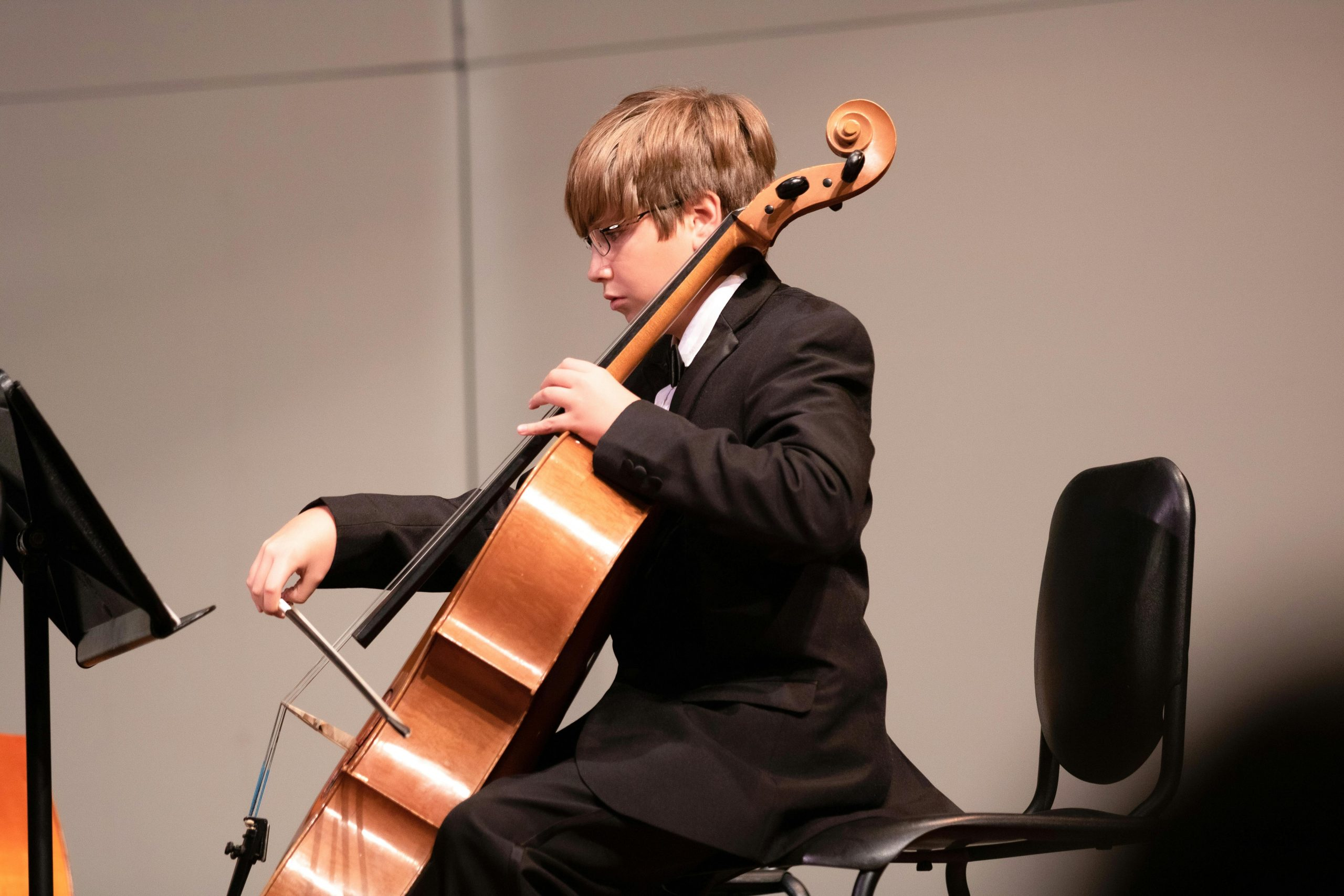
    The cello is the largest of the string instruments and produces a mellow, smooth sound. Its size and deep, resonant sound give it the nickname “bass violin,” and it often plays the bass line in orchestral pieces. The cello also has a wide range and can play both melodic and accompanying roles in an orchestra.

    The Double Bass

    The double bass, also known as the contrabass, is the largest and lowest-pitched instrument in the string family. It plays a crucial role in the orchestra’s rhythmic foundation, providing the bassline and often anchoring the harmony. Its deep, rich sound adds depth and power to orchestral pieces.

    The Woodwind Family

    The woodwind family consists of instruments made of wood or metal and produce sound by blowing air through a mouthpiece or reed. These instruments add color, texture, and mystery to orchestral pieces and can also play both melodic and accompanying roles.

    The Flute

    The flute is the highest-pitched instrument in the woodwind family, providing a clear, delicate sound. It is typically made of metal and played by blowing air across a small hole. The flute is often used to play melodic lines and is a featured instrument in many classical pieces.

    The Clarinet

    The clarinet, with its distinctive curved shape, is played by blowing air through a single reed attached to a mouthpiece. It has a wide range and can produce both mellow and piercing tones. The clarinet is often used for melodic lines and has a significant role in creating the orchestral sound.

    The Oboe

    The oboe, an important member of the woodwind family, has a distinctive sound that is both warm and nasal. It has a long, slender body with a conical bore and is played by blowing air between two vibrating reeds. The oboe is often used to play melodies and solos in an orchestral setting.

    The Bassoon

    The bassoon produces the lowest notes in the woodwind family and has a unique, reedy sound. It has a long, curved body with a double reed attached to a mouthpiece. The bassoon is often used for playing the bassline in orchestral pieces and adds a dark, rich tone to the overall sound.

    The Brass Family

    The brass family is made up of instruments that produce sound by buzzing lips into a cup-shaped mouthpiece. These instruments provide power, brilliance, and grandeur to orchestral music and are essential in creating climactic moments.

    The Trumpet

    The trumpet, with its bright, piercing sound, is often the lead instrument in the brass section. It has a cylindrical bore and a narrow, flared bell, allowing it to produce clear, powerful high notes. The trumpet is used for solo performances, as well as playing fanfares and melodies in an orchestral setting.

    The French Horn

    The French horn is a versatile instrument with a wide range and a warm, mellow sound. What makes it unique is its coiled shape, which gives it a distinctive appearance and a mellow tone. The French horn plays a significant role in adding depth and richness to the brass section.

    The Trombone

    The trombone, with its long, sliding tube and a larger, flared bell, is known for its deep, powerful sound. Its unique slide mechanism allows for a wide range of notes to be played smoothly, making it an essential instrument in orchestral music. The trombone often plays the bassline and adds weight and depth to the overall sound of an orchestra.

    The Tuba

    The tuba is the largest and lowest-pitched instrument in the brass family, providing a rich, somber sound. It has a round, curved shape and is traditionally tuned to support the bassline in orchestral pieces. The tuba adds a sense of grandeur and depth to orchestral music and is often used for creating dramatic effects.

    The Percussion Family

    The percussion family consists of instruments that produce sound when struck or shaken. These instruments provide rhythm and texture to orchestral music and often add a touch of drama to performances.

    The Timpani

    The timpani, also known as kettle drums, are large, bowl-shaped drums that produce a deep, resonant sound. They are played by striking a mallet on the drumhead, and their sound adds emphasis and intensity to orchestral pieces.

    The Snare Drum

    The snare drum, with its tight, snappy sound, is often used to add rhythm and pulse to orchestral pieces. It is a shallow, cylindrical drum with a “snare” stretched across the bottom, giving it its distinctive sound. The snare drum adds a sense of movement, excitement, and drama to orchestral music.

    The Cymbals

    The cymbals are metallic, round plates that are clashed together to produce a loud, shimmering sound. They are used to create dramatic and climactic effects in orchestral music, adding tension and excitement to a performance.

    The Xylophone

    The xylophone is a pitched percussion instrument with a series of wooden bars that are struck with mallets to produce a bright, ringing sound. It is often used to add a playful, whimsical element to orchestral music and can also play melodies and solos.

    With this essential guide, you now have a better understanding of the various instruments that make up an orchestra and their roles in creating beautiful music. So sit back, close your eyes, and enjoy the unique sounds of each instrument as they come together to create an unforgettable, orchestral masterpiece.


  • Simple Ways to Make Your Workouts More Effective

    Simple Ways to Make Your Workouts More Effective

    If you’re someone who is dedicated to living a healthy lifestyle, then you probably already know the importance of regular exercise. Not only does it help you maintain a fit and toned body, but it also has numerous health benefits such as reducing stress, boosting energy, and improving overall well-being. However, just like anything else in life, doing the same thing over and over again can become mundane and even less effective. So, if you’re looking to take your workout routine to the next level, here are some simple ways to make your workouts more effective.

    1. Set Specific Goals

    Before you even start your workout, it’s essential to have a specific goal in mind. Whether it’s losing weight, building muscle, or increasing endurance, having a clear objective will help you stay focused and motivated towards achieving it. Not only will this make your workouts more purposeful, but it will also give you a sense of accomplishment when you reach your goal.

    2. Mix It Up

    Routine can be good for some things, but when it comes to workouts, it can become counterproductive. When your body gets used to doing the same exercises repeatedly, it becomes more efficient and burns fewer calories. To prevent this from happening, switch up your workouts every few weeks. This will not only challenge your body in new ways but also prevent boredom and keep your motivation levels high.

    3. Use Proper Form

    No matter what type of workout you’re doing, using proper form is crucial. Not only does it prevent injuries, but it also ensures that you are targeting the intended muscles. Take the time to learn the proper techniques for each exercise and focus on maintaining that form throughout your workout. This will not only make your workouts more effective but also help you see results quicker.

    4. Increase Intensity

    One of the best ways to make your workouts more effective is by increasing their intensity. This can be done in various ways – adding weights, increasing the number of sets and reps, or reducing rest time. Whatever method you choose, remember to gradually increase the intensity to avoid injuries. This will challenge your body and push it to work harder and burn more calories.

    5. Incorporate HIIT

    High-Intensity Interval Training (HIIT) has gained popularity in recent years, and for a good reason. This type of workout involves short bursts of high-intensity exercises followed by periods of rest or low-intensity activity. Not only does it keep your heart rate up, but it also burns more fat in a shorter period. Incorporating HIIT into your workout routine will make your workouts more efficient and help you achieve your fitness goals faster.

    6. Focus on Recovery

    While pushing your body to its limits during workouts is essential, it’s equally important to allow your body to recover. This includes getting enough sleep, eating a balanced and nutritious diet, and taking rest days. Giving your muscles time to repair and rebuild is crucial for improving strength and endurance. Neglecting recovery can lead to injuries, fatigue, and hinder your progress in the long run.

    7. Stay Hydrated

    Water is often overlooked, but it plays a vital role in making your workouts more effective. Dehydration can lead to decreased performance, muscle cramps, and dizziness, making it challenging to complete your workout. Make sure to drink enough water before, during, and after your workout to keep your body hydrated and functioning at its best.

    Final Thoughts

    Making your workouts more effective doesn’t have to involve complicated or drastic changes. By implementing these simple ways, you can increase the efficiency of your workouts and reach your fitness goals faster. Remember to stay dedicated, be consistent, and listen to your body. With these tips, you’ll be on your way to a more effective and rewarding workout routine!

  • How Copyright Law Protects Intellectual Property in Music

    How Copyright Law Protects Intellectual Property in Music

    Musical compositions are often considered as the language of emotions, connecting people from different walks of life. Just like any other form of creation, music is the product of hard work and creativity. This makes it imperative to protect the rights of those who create it, otherwise, anyone could simply steal and profit from someone else’s work. This is where copyright law plays a crucial role. In this article, we will discuss how copyright law protects intellectual property in music and its significance in the music industry.

    The Basics of Copyright Law

    First and foremost, let’s define what copyright law is. Copyright law grants creators the exclusive right to control the use of their original works. This includes the right to reproduce, distribute, and publicly perform or display their work. In simpler terms, copyright law protects the original creators from having their work stolen or used without their permission.

    The U.S. Copyright Act passed in 1976 provides automatic copyright protection to any original work, including musical compositions. This means that the moment a song is created and put into a tangible form, such as recording or sheet music, it is automatically protected by copyright law. However, registering your work with the U.S. Copyright Office provides additional legal protections and advantages in case of any copyright infringement.

    The Importance of Copyright Law in Music

    Music is a multi-billion dollar industry, and without copyright law, artists and creators would not receive the credit and compensation they deserve. Copyright law enables musicians and other music industry professionals to make a living from their creations, allowing them to continue making music that brings joy to millions of listeners.

    Additionally, copyright law protects against piracy and plagiarism, which are rampant in the music industry. With the rise of digital technology, it has become easier for people to illegally download and distribute copyrighted music without the creator’s permission. Copyright law allows creators to take legal action against those who profit from their work without authorization, ensuring fair compensation for their efforts.

    Moral Rights of Musicians

    Aside from economic benefits, copyright law also protects the moral rights of musicians. These are the personal rights of an artist, such as the right to be credited for their work and the right to maintain the integrity of their creations. These moral rights are crucial in maintaining the authenticity and integrity of the music industry, allowing artists to have control over how their work is presented to the public.

    The Role of Performance Rights Organizations

    Performance Rights Organizations (PROs) play a vital role in protecting the rights of musicians. These organizations collect royalties on behalf of artists when their music is publicly performed or broadcasted. By monitoring and enforcing the use of copyrighted music, PROs ensure that artists receive proper compensation for their work.

    The Future of Copyright Law and Music

    The rise of digital music has brought about new challenges for copyright law. With the advent of streaming services and social media, music has become more accessible than ever. However, this also means that music is more vulnerable to copyright infringement. As a result, legislation, such as the Music Modernization Act, is continuously being updated to address these challenges and protect the rights of musicians.

    Impact on Emerging Artists

    Copyright law also affects emerging artists who are just starting their careers. Without copyright protection, these artists may find it difficult to establish themselves in the industry, as their work could easily be copied and distributed without their consent. Providing copyright protection to these artists gives them a fair chance of succeeding in the competitive music industry.

    Final Thoughts

    Copyright law is crucial not just for the music industry, but for all creative industries in general. It protects the rights and interests of musicians, ensuring that their hard work and creativity are not exploited by others. As the music industry continues to evolve, it is imperative that copyright law adapts to these changes to provide adequate protection to artists and creators.

    Ultimately, musicians should be able to focus on creating music without having to worry about their work being misused or undervalued. With a robust and updated copyright law in place, we can all continue to enjoy the melodies and lyrics that inspire us and connect us to one another.

  • Developing a Deeper Connection With Your Local Community

    Developing a Deeper Connection With Your Local Community

    Welcome to your local community, a place filled with unique individuals, small businesses, and a strong sense of belonging. As we go about our daily lives, it’s easy to get caught up in our own routines and forget to truly connect with the people and places around us. But building a deeper connection with your local community can bring numerous benefits, both for yourself and for those around you. In this article, we’ll discuss the importance of developing a deeper connection with your local community, and provide some tips on how to do so in a meaningful way. Let’s dive in!

    The Value of Connecting With Your Local Community

    Before we get into the how, let’s first explore the why. Why is it important to develop a deeper connection with your local community?

    1. A Sense of Belonging and Support

    Connecting with your local community can provide a sense of belonging and support, especially if you’re new to the area or feeling isolated. By getting to know your neighbors and local businesses, you’ll start to feel like a part of something bigger and have a support system in times of need. Whether it’s helping out with a household emergency or simply having a friendly chat, your local community can become your extended family.

    2. A Stronger Local Economy

    When you support local businesses and participate in community events, you’re helping to build a stronger local economy. This not only benefits the businesses, but also your community as a whole. Strong local businesses can provide more job opportunities, attract tourists, and enhance the overall quality of life in the area.

    3. Positive Social Impact

    Developing a deeper connection with your local community can also have a positive social impact. By getting involved in community initiatives and charities, you can help make a difference in the lives of others. This can also inspire and encourage others to do the same, creating a ripple effect of goodness and kindness.

    Tips for Developing a Deeper Connection

    Now that we understand the importance of connecting with our local community, let’s explore some ways to do so effectively.

    1. Attend Local Events

    One of the easiest ways to get involved and meet new people is by attending local events. These can range from festivals and concerts to charity fundraisers and community markets. Not only will you have a great time, but you’ll also have the opportunity to support local businesses and initiatives.

    2. Join Groups and Organizations

    There are likely numerous groups and organizations in your local community that align with your interests and values. Joining these groups not only allows you to connect with like-minded individuals, but also gives you the chance to make a positive impact and contribute to your community in a meaningful way.

    3. Volunteer Your Time

    Volunteering is a fantastic way to give back to your local community and connect with others. You can choose to volunteer at a local charity, community center, or even by helping out your neighbors. It’s a win-win situation – you’re making a difference while also building relationships.

    4. Shop and Dine Locally

    Instead of always opting for big chain stores and restaurants, make an effort to support local businesses. Not only does this help to boost the local economy, but it also allows you to get to know the people behind the businesses and have a more personalized experience.

    As you can see, developing a deeper connection with your local community is beneficial for both yourself and those around you. By taking the time to get involved, support local businesses, and connect with your neighbors, you can build a stronger sense of belonging and make a positive impact. Let’s all strive to nurture and strengthen our local communities – it’s truly a win for everyone involved.

  • The Value of Tracking Your Personal Health Metrics

    The Value of Tracking Your Personal Health Metrics

    In today’s modern world, individuals are becoming more conscious of their personal health and well-being. With the rise of wearable technology and fitness trackers, tracking personal health metrics has become increasingly accessible and popular. But why is it important to track these metrics? In this article, we will explore the value of tracking your personal health metrics and how it can benefit your overall health and wellness.

    The Importance of Keeping Track of Your Health Metrics

    Tracking your personal health metrics involves monitoring and recording various aspects of your health, such as exercise, sleep patterns, and nutrition. It provides a detailed snapshot of your overall health and can help identify any areas that may need improvement. By tracking your progress over time, you can also gauge the effectiveness of any changes or interventions you make in your lifestyle.

    Understanding Your Body’s Needs

    Each individual’s body has unique needs, and tracking your personal health metrics can help you understand these needs better. By monitoring your food intake, for example, you can identify any deficiencies in your diet and make necessary changes. Similarly, tracking your exercise habits can help you determine the amount and type of physical activity that works best for your body.

    Preventing and Managing Chronic Diseases

    By keeping track of your personal health metrics, you can also identify any potential red flags or warning signs that could indicate a potential health issue. For instance, tracking your blood pressure and cholesterol levels can help you detect any risk factors for heart disease. This early detection can prompt you to make necessary lifestyle changes to prevent the development of chronic diseases.

    Motivation and Accountability

    Incorporating personal health metrics tracking into your routine can be a powerful motivational tool. Seeing your progress in numbers can give you a sense of accomplishment and encourage you to keep pushing towards your health goals. It also provides a sense of accountability as you have a tangible record of your efforts.

    The Benefits of Utilizing Technology for Tracking Health Metrics

    Thanks to advancements in technology, there are now various apps and devices available to help individuals track their health metrics easily. These tools not only make the tracking process more convenient but also provide additional features such as goal setting, analysis of trends, and integration with other health-related apps.

    Increased Awareness and Motivation

    By using technology to track your health metrics, you have access to real-time data, which can increase your awareness of your habits and behaviors. This increased awareness can help motivate you to make healthier choices and stay on track towards your goals.

    Easier Data Management and Analysis

    With manual tracking, it can be challenging to keep track of all the different metrics and organize the data in a meaningful way. Technology simplifies this process by automatically collecting and storing the data for you. It also provides visualization tools to help you analyze your progress and identify patterns or areas for improvement.

    Community Support and Accountability

    Many health tracking apps and devices also offer a sense of community by allowing users to connect with others and share progress and tips. This can provide a source of motivation and accountability as you have a support system to keep you on track.

    Conclusion

    In conclusion, tracking your personal health metrics can bring many benefits to your health and well-being. By understanding your body’s needs, preventing chronic diseases, and using technology to simplify the process, you can improve your overall health and lead a more fulfilling life. So, start tracking your health metrics today and see the positive impact it can have on your life.

  • Exploring the Intersection of Music, Dance, and Movement

    Exploring the Intersection of Music, Dance, and Movement

    The art forms of music, dance, and movement have always been intertwined throughout history. From tribal rituals and traditional ceremonies to modern performances and social dances, the intersection of these three elements has captivated and captivated audiences for centuries. While each form of expression can stand on its own, it is when they are combined that a powerful and mesmerizing experience is created. In this article, we will explore the intersection of music, dance, and movement, and how they have evolved, influenced, and complemented each other throughout time.

    The Origins of Music, Dance, and Movement

    Before the written word, people used music, dance, and movement to tell stories, celebrate, and express themselves. Rock paintings depicting dancers and musicians have been found in caves and rock shelters dating back thousands of years. These early forms of expression were often linked to religious or spiritual practices and were a way to bring communities together.

    The Role of Music in Dance and Movement

    Music has always been an essential element in the art of dance and movement. It sets the tone, establishes rhythm, and creates a connection between the dancers and the audience. In ancient civilizations, music was considered a sacred language that could evoke powerful emotions, communicate stories and bring people together in a shared experience. In many traditional cultures, music and dance were intertwined, with certain movements being specifically choreographed to match the beat and melody of the music.

    The Connection between Dance and Movement

    While dance and movement are often used interchangeably, they are not the same. Dance is a form of expression through rhythmic and coordinated movement of the body. Movement, on the other hand, is the act of changing physical location or posture. However, when combined, they create a dynamic and expressive art form that allows individuals to communicate and connect with others without the need for words.

    Music, Dance, and Movement in Modern Society

    As society evolved, so did the art of music, dance, and movement. What once were ritualistic practices, have now become forms of entertainment, self-expression, and socialization. Today, we can see the influence of music, dance, and movement in various aspects of our lives, from popular music videos and stage performances to group fitness classes and social media challenges.

    The Evolution of Dance Styles

    Throughout history, dance has evolved and adapted to different cultures, social norms, and trends. From ballet and ballroom dancing to hip hop and contemporary, the styles and movements have constantly shifted and transformed. Dance styles from different cultures have also been incorporated and fused together, creating new and unique forms of expression.

    The Impact of Music and Movement on Our Well-Being

    The combination of music, dance, and movement has a profound impact on our physical and mental well-being. Studies have shown that dancing and physical activities associated with music can improve muscle tone, coordination, balance, and cardiovascular health. It has also been linked to improving mood and reducing stress and anxiety. This is due to the release of endorphins, often referred to as the ‘feel-good’ hormones, which occur during physical exercise and activities.

    The Future of Music, Dance, and Movement

    The future of music, dance, and movement is constantly evolving and expanding, with technological advancements giving rise to new and innovative ways to combine these art forms. With the rise of virtual reality and augmented reality, we can expect to see even more immersive and interactive experiences that merge music, dance, and movement.

    Bringing People Together

    The intersection of music, dance, and movement not only brings individuals together but also bridges cultural barriers. It is a universal language that transcends language, race, and nationality. In a world where divisiveness and differences often dominate, the unifying power of music, dance, and movement is more important than ever.

    In conclusion, the intersection of music, dance, and movement is a powerful force that has stood the test of time. It has the ability to evoke emotions, bring people together, and transcend boundaries. As society and technology continue to evolve, we can only imagine what exciting new forms of music, dance, and movement will emerge, but one thing is for sure, their intersection will continue to inspire and captivate audiences for generations to come.

  • Exploring the Benefits of Tai Chi and Gentle Movement

    Exploring the Benefits of Tai Chi and Gentle Movement

    >

    Tai Chi and gentle movement practices have been gaining popularity over the years for their numerous mental, physical, and emotional benefits. Originating in ancient China, Tai Chi is an ancient martial art and meditative practice that promotes balance, flexibility, and inner peace. Unlike other high-intensity forms of exercise, Tai Chi and gentle movement focus on slow, deliberate movements that gently stretch and strengthen the body. In this article, we will delve into the world of Tai Chi and gentle movement, exploring their benefits and how they can improve your overall well-being.

    The Physical Benefits of Tai Chi and Gentle Movement

    Regular practice of Tai Chi and gentle movement can have a significant impact on your physical health. The slow and controlled movements improve balance, coordination, and flexibility, making it a popular form of exercise for older adults. One study conducted by the National Institutes of Health found improvements in balance and lower body strength after just 12 weeks of Tai Chi practice.

    In addition to improving balance and coordination, Tai Chi and gentle movement can also strengthen muscles and joints. The slow movements, combined with deep breathing techniques, help to increase blood flow and oxygen to the muscles, promoting strength and endurance. This can be especially beneficial for those who may have joint pain or stiffness, as the gentle movements can help to loosen and lubricate the joints.

    The Mental and Emotional Benefits of Tai Chi and Gentle Movement

    The mental and emotional benefits of Tai Chi and gentle movement are just as significant as the physical benefits. The slow and deliberate nature of these practices can help to calm the mind and promote a sense of relaxation. This can be especially beneficial for individuals who experience stress, anxiety, or have trouble sleeping.

    Reduces Stress and Anxiety

    Tai Chi and gentle movement can be seen as moving meditation, as the focus on the breath and the slow movements help to quiet the mind and release tension in the body. This can help to reduce stress and anxiety, as well as improve overall mental well-being.

    Promotes Relaxation and Inner Peace

    In today’s fast-paced world, it can be challenging to find time to slow down and relax. Tai Chi and gentle movement practices provide a space to do just that. The slow and repetitive movements help to quiet the mind and promote a sense of inner peace and relaxation. Regular practice can lead to reduced feelings of anger and frustration, and an overall increase in emotional well-being.

    Who Can Benefit From Tai Chi and Gentle Movement?

    Tai Chi and gentle movement practices are suitable for people of all ages and fitness levels. Whether you are a senior looking for a low-impact form of exercise, an athlete looking to improve balance and flexibility, or someone looking to reduce stress and anxiety, Tai Chi and gentle movement have something to offer.

    Tai Chi and gentle movement can also be beneficial for individuals with chronic conditions such as arthritis, fibromyalgia, and Parkinson’s disease. The gentle movements and focus on breathwork can help to alleviate symptoms and improve overall quality of life.

    Incorporating Tai Chi and Gentle Movement Into Your Routine

    One of the best things about Tai Chi and gentle movement is that it can be practiced almost anywhere. Whether it’s in a park, a community center, or even in your own home, all you need is a quiet space and comfortable clothing. There are also various online classes and resources available for those who may not have access to a local group or instructor.

    It is essential to find a qualified instructor who can guide you through the proper technique and postures. This will not only ensure that you get the maximum benefits, but it will also help to prevent injuries.

    The Bottom Line

    Tai Chi and gentle movement may not be as well-known as other forms of exercise, but their benefits cannot be overlooked. From improving physical fitness and reducing stress to promoting relaxation and inner peace, these practices can have a positive impact on a person’s overall well-being. So, why not give Tai Chi and gentle movement a try and see how it can benefit you?

    Remember, like with any other form of exercise, the key is consistency. So make a commitment to practice regularly, and you will soon begin to reap the many benefits that Tai Chi and gentle movement have to offer.